
From the AD&D Monster Manual to the Dragon Reborn, a personal look at the books that sparked a lifelong fascination with dragons.
As a proud member of Generation X, I grew up in an era when Dungeons & Dragons, paperback fantasy novels, and a healthy imagination could transport you to extraordinary worlds.
Throughout my formative years, I encountered dragons of every imaginable kind. Intelligent dragons. Undead dragons. Ice dragons. Dragons that could be befriended, dragons that could devastate armies, and even dragons that weren’t dragons at all.
Each expanded my imagination and helped shape my lifelong fascination with these extraordinary creatures.
The following ten books and/or series aren’t necessarily the greatest dragon stories ever written, nor are they ranked in order of importance. They’re simply ten that left an impression on me.
And, looking back, I can see how they helped plant the seeds of what would eventually become the concept of Carpe Draco.
This article contains affiliate links. I may earn a commission if you purchase through them. As an Amazon Associate I earn from qualifying purchases.
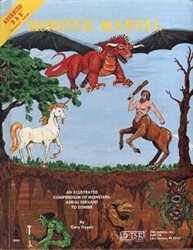
1. Monster Manual — Gary Gygax (AD&D 1st Edition, 1977)
I was about twelve or thirteen when a friend introduced me to Dungeons & Dragons. The game hooked me immediately.
After one of our early play sessions, I picked up the game’s Monster Manual and started flipping through its pages. I was mesmerized by the incredible variety of creatures, but the dragons especially caught my attention.
Until then, I’d thought of dragons as fairly simple monsters. Big, dangerous, fire-breathing beasts. The Monster Manual changed all that.
Suddenly, dragons came in different colors, possessed different abilities, and had distinct personalities. Some breathed fire, others lightning, acid, or poisonous gas. Some were vicious and cruel, while others were intelligent, noble, or even benevolent.
The Monster Manual transformed dragons from simple fire-breathing monsters into fascinating creatures with their own powers, personalities, and possibilities. It helped spark a fascination that’s stayed with me ever since.
2. The Hobbit — J.R.R. Tolkien (1937)
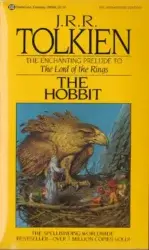
After discovering Dungeons & Dragons, I was introduced to Lloyd Alexander’s The Book of Three, my first fantasy novel. When a teacher learned that I enjoyed both D&D and Alexander’s books, she suggested I read The Hobbit.
That’s how I met Smaug.
What fascinated me most about Tolkien’s famous dragon wasn’t his enormous size, his fiery breath, or even his fabulous treasure hoard. It was his conversations with Bilbo Baggins.
Smaug could talk! And he wasn’t just intelligent. He was arrogant, cunning, suspicious, and thoroughly convinced of his own superiority. His exchanges with Bilbo were as entertaining as they were dangerous.
Here was something wonderful: a dragon that was both an intelligent being and a gigantic, terrifying monster. Smaug didn’t need to breathe fire to be frightening. He could make you nervous just by asking questions.
The Monster Manual had introduced me to the idea that dragons could be intelligent creatures with distinct personalities. Smaug showed me just how entertaining—and intimidating—such a dragon could be.
3. Dragonsbane — Barbara Hambly (1985)
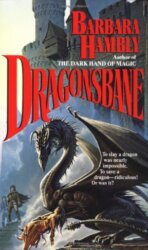
By the time I discovered Barbara Hambly’s Dragonsbane, I was already fascinated by dragons. But this book introduced me to something I hadn’t really considered: what would it actually be like to hunt and fight one?
Forget the noble knight in gleaming armor, charging heroically toward a dragon with a sword raised high. In Dragonsbane, dragon hunting was dirty, brutal, and extraordinarily dangerous.
John Aversin wasn’t some dashing storybook hero. He was a practical, resourceful man who understood that fighting a dragon required far more than courage and a weapon.
In fact, he’d earned his reputation as a dragonslayer by using poisoned harpoons and an axe. Prince Gareth, who’d grown up hearing glorious ballads about dragonslayers, was horrified to learn that his hero had resorted to such dishonorable tactics.
But how else was a man supposed to defeat an enormous, armored, fire-breathing monster?
I like to think of John Aversin as a medieval Batman preparing to fight Superman. He knew he couldn’t match his opponent’s strength, so he studied its weaknesses, prepared carefully, and used every advantage he could find.
Dragonsbane made me appreciate something I’d never given much thought to before: defeating a dragon should be an extraordinary achievement, not just another heroic adventure.
4. Memory, Sorrow, and Thorn — Tad Williams (1988–1993)
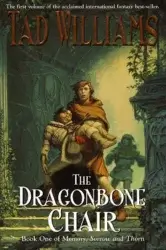
Tad Williams’ Memory, Sorrow, and Thorn trilogy reinforced two things I’d come to appreciate about dragons: they weren’t all fire-breathing lizards, and fighting one should be an absolutely terrifying experience.
In The Dragonbone Chair, Simon encounters Igjarjuk, a monstrous ice dragon, on the mountain of Urmsheim. This isn’t some glorious duel between a fearless hero and a conveniently vulnerable monster. The encounter turns deadly, and not everyone survives.
Even Simon, who lives through the encounter, doesn’t escape unharmed. He suffers a wound that leaves him permanently scarred and earns him the name Simon Snowlock.
That detail stayed with me.
Like the dragons of the Monster Manual, Igjarjuk demonstrated just how varied these creatures could be. A dragon didn’t necessarily have to breathe fire or resemble the traditional beasts of medieval legends.
And like Dragonsbane, Williams’ story made the consequences of confronting such a creature feel real. A dragon could kill experienced warriors and leave survivors forever changed.
For me, that’s exactly how an encounter with a dragon ought to feel. Dangerous, costly, and unforgettable.
5. Dragondoom — Dennis L. McKiernan (1990)
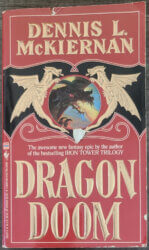
One of the things I particularly enjoyed about Dennis L. McKiernan’s Dragondoom was its unusual structure. The novel tells two stories set in different periods, gradually revealing how the events of the past connect to those of the present.
I loved that approach.
And the dragons were equally interesting.
The dragon Sleeth suffered from a deadly vulnerability (no spoilers!). No matter how powerful he was, exposure to this vulnerability could kill him. His enemies had to find a way to exploit that weakness rather than simply overpower him.
I loved the idea that even the mightiest dragons might possess weaknesses that clever opponents could exploit.
Once again, dragons were far more than big fire-breathing lizards. They were formidable creatures whose unusual abilities—and vulnerabilities—made them fascinating adversaries.
6. Xanth — Piers Anthony (1977–present)
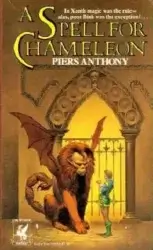
Not every fantasy adventure needs to involve desperate battles, terrifying monsters, and the fate of the world.
Piers Anthony’s Xanth series, beginning with A Spell for Chameleon in 1977, offered something different. These books were filled with magical creatures, ridiculous puns, strange adventures, and a healthy dose of humor.
And among their most memorable inhabitants was Stanley Steamer, the Gap Dragon.
I particularly enjoyed how Xanth approached fantasy. Adventure could be exciting without always being grim or deadly serious. Magic could be silly. Monsters could be funny. And dragons could be characters you actually liked spending time with.
Stanley embodied that spirit.
After encountering so many dragons that were terrifying adversaries, it was refreshing to discover one that could also be a source of humor and affection.
The Xanth books helped reinforce something I’ve appreciated ever since: dragons don’t always have to be fearsome monsters. Sometimes they can simply be fun.
7. Dragonlance — Margaret Weis and Tracy Hickman (1984)
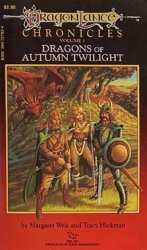
For someone who discovered fantasy through Dungeons & Dragons, the Dragonlance novels were something special.
Beginning with Dragons of Autumn Twilight in 1984, Margaret Weis and Tracy Hickman brought the familiar world of D&D to life in prose. Here were the warriors, wizards, thieves, monsters, and magical treasures I’d encountered around the gaming table, now woven into an epic adventure.
And, of course, there were dragons.
In the first novel, the heroes encounter Khisanth, a fearsome black dragon whose acidic breath and deadly abilities would have been immediately familiar to anyone who’d spent time studying the Monster Manual.
That was part of the appeal. The dragons I’d first discovered as illustrations and game statistics were now participating in a sweeping fantasy adventure, complete with memorable heroes, powerful villains, and enormous battles. (Shout out to Tasslehoff Burrfoot, one of the most memorable fantasy characters from my youth).
Dragonlance brought together two things I already loved: Dungeons & Dragons and fantasy literature. And it gave the dragons of my gaming imagination a whole new world in which to spread their wings.
8. Elric/Stormbringer — Michael Moorcock (1965)
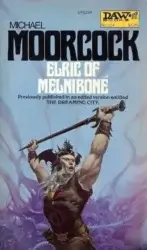
I love Elric of Melniboné. Always have. Always will. And, once again, I have Dungeons & Dragons to thank for making the introduction.
The original gamebook Deities & Demigods (1980) was essentially a Monster Manual of gods, legendary heroes, and mythological beings. Among its many entries were characters from Michael Moorcock’s Elric stories, including the albino sorcerer-emperor himself and his infamous soul-drinking sword, Stormbringer.
That introduction led me to Moorcock’s novels and a world caught between the cosmic forces of Law and Chaos. Better yet, the Melnibonéans were Dragon Lords.
Their dragons were extraordinary creatures. Intelligent and immensely powerful, they served as flying weapons of war for an ancient empire. But their incredible abilities came with an equally incredible limitation: after fighting, they needed years, sometimes centuries, of sleep to recover their strength.
Imagine commanding dragons powerful enough to devastate armies, only to discover that using them today might leave them unavailable for generations!
By Elric’s time, the once-mighty Melnibonéan Empire was crumbling, and its dwindling dragons were reminders of its former glory.
In Stormbringer, Elric and his surviving kinsman awaken the remaining dragons for a final, desperate battle against the forces of Chaos.
I love the idea of dragons being more than individual monsters or adversaries. In Moorcock’s world, they were part of a civilization’s history, military power, and identity.
And I can’t imagine putting together a list of the fantasy books that shaped my love of dragons without including Elric.
9. Spellfire — Ed Greenwood (1988)
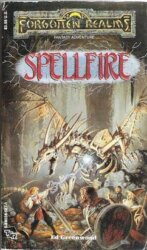
By now, you’re probably beginning to notice a theme. Dungeons & Dragons. Ed Greenwood’s Spellfire takes place in D&D’s Forgotten Realms, a sprawling fantasy setting filled with powerful wizards, dangerous monsters, ancient magic, and, naturally, dragons.
But one type of dragon in particular stood out to me.
The dracolich.
As if an enormous, intelligent, fire-breathing monster wasn’t frightening enough, imagine a giant living skeleton of a dragon!
A dracolich retained the formidable abilities and intelligence of a living dragon while gaining the unnatural powers and resilience of undeath. It was essentially a dragon transformed into a lich—an undead wizard.
And Spellfire featured several of these horrors, including Rauglothgor, Aghazstamn, and Shargrailar.
Talk about diversity!
The Monster Manual had originally opened my eyes to the incredible variety of dragons that existed in fantasy. Spellfire continued expanding those possibilities, introducing me to a creature that combined two of the genre’s most formidable monsters.
It was another reminder that dragons weren’t limited to a handful of familiar shapes, colors, or abilities. Fantasy writers could take the concept in almost any direction, and I loved it. Still do.
10. The Wheel of Time — Robert Jordan (1990)
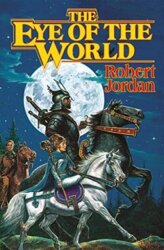
Finally, here’s a dragon that wasn’t actually a dragon.
Robert Jordan’s The Wheel of Time, beginning with The Eye of the World in 1990, introduced me to an entirely different interpretation of the word.
The Dragon wasn’t an enormous winged monster. He was a man.
A legendary figure from a previous Age had been known as the Dragon. Thousands of years later, a young shepherd named Rand al’Thor discovers that he is this figure returned – the Dragon Reborn, and he was destined to play a central role in the fate of the world.
Here, the dragon wasn’t a creature to be hunted, slain, befriended, or ridden. It was a symbol of extraordinary power, destiny, and the potential for both destruction and salvation.
After years of encountering dragons in every imaginable shape and form, author Jordan showed me that a dragon didn’t even need scales, wings, or fiery breath to qualify.
In fact, the definition of dragon was limited only by imagination.
I am reminded of this every time I see this site’s namesake, Carpe Draco – Seize the Dragon!
No spam. Unsubscribe anytime. Your email stays in the hoard.