
From Pixelated Ducks to World-Breakers: My 10 Favorite Dragons in Video Games
Affiliate Disclosure: This article contains Amazon affiliate links. If you make a purchase through these links, I may earn a small commission at no additional cost to you.
I’ve been chasing dragons through video games for about 45 years.
That sounds much more impressive if you don’t know what video-game dragons looked like when I started.
This isn’t a ranking of the ten greatest dragons in gaming. I’m not going to pretend I’ve played every game featuring a dragon, nor am I going to tell you that my favorites should be your favorites. These are my dragons—the ones I remember, the ones that impressed me, and the ones connected to particular times in my life as a gamer.
So rather than rank them from tenth to first, let’s do this chronologically.
We’ll begin in an ancient age when heroes were rectangles, dragons looked suspiciously like ducks, and somehow that was more than enough.
1. Yorgle, Grundle & Rhindle — Adventure (1980)

If you have to ask why this trio of fearsome beasts appears on the list, you’re too young.
Yorgle, Grundle and Rhindle hail from the ancient times of the OG home gamers: Gen-X.
Imagine a square box of a television that weighed more than a stuffed treasure chest from a dragon’s hoard. Place yourself on the floor about two feet in front of it. Grab an Atari joystick with one red button.
Now you’re ready to play Adventure on the Atari 2600.
Released in 1980, Adventure cast you as a brave hero on a quest to recover an enchanted chalice. And by “brave hero,” I mean a fat, featureless block.
But that block had enemies.
Dragons.
There was Yorgle, the yellow dragon; Grundle, the green dragon; and Rhindle, the red dragon—the fastest and nastiest of the bunch.
Did they look like dragons?
No.
They looked like pixelated ducks.
It didn’t matter.
Yorgle, Grundle and Rhindle were dragons, and we were grateful—and terrified—to have them.
2. Aquamentus — The Legend of Zelda (1987 U.S.)
What an upgrade six or seven years could make.
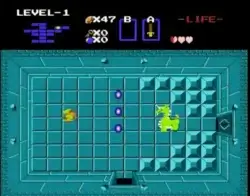
Nintendo’s original The Legend of Zelda gave us Aquamentus, the guardian of the game’s first dungeon. Compared with the duck-dragons of Adventure, this thing was magnificent.
Aquamentus actually looked like a dragon.
Well…mostly.
He was green, had little wings and sported what appeared to be a unicorn horn growing from his forehead. But there was no mistaking the important part: this was a dragon, and Link had to fight him.
Aquamentus could launch three fireballs simultaneously. If Link still had all of his hearts, he could keep his distance and return fire with Sword Beams.
Today, it looks primitive.
To someone whose previous home-console dragons resembled waterfowl, it was glorious.
3. Dark Dragon — Shining Force (1993)
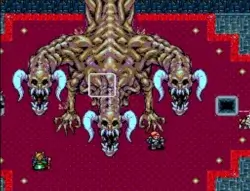
Shining Force on the Sega Genesis didn’t revolutionize graphics for me the way some other games on this list did.
What Shining Force—and particularly its final boss—gave me was something different:
Epicness.
The battle against the three-headed Dark Dragon was long, involved and fun as hell.
This wasn’t a boss fight where you controlled one hero, dodged a few fireballs and hammered an attack button. Shining Force was a tactical RPG. You commanded an entire party of adventuring heroes, each with different abilities and positional requirements.
Warriors had to get close. Ranged fighters needed firing positions. Wizards had spells to unleash. Healers had people to keep alive. And depending upon your party, you could even bring along your very own dragon companion, Bleu.
Dark Dragon wasn’t just something I fought.
I coordinated a virtual siege against him.
Fighting Dark Dragon was like playing a mythic game of chess using wizards, warriors and your very own dragon.
My battles could last more than ten minutes.
And I loved every minute of them.
4. Spyro — Spyro the Dragon (1998)
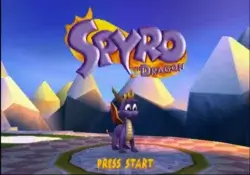
Then came Spyro.
Forget fighting the dragon. Now I was the dragon.
I loved Spyro himself: spunky, fearless and armed with a can-do attitude that made the little purple dragon seem ready to take on anything.
But what really blew me away about the original PlayStation game was its world.
Spyro wasn’t trapped on a side-scrolling path.
He could run forward. Backward. Left. Right. Around things. Behind things. The camera moved with him. Suddenly I was exploring a colorful 3D fantasy world in 360 degrees.
Younger gamers who grew up in 3D worlds probably can’t appreciate how liberating that felt.
For me, Spyro the Dragon wasn’t merely a game featuring a dragon I liked. It changed what I thought moving through a video-game world could feel like.
Good news! A remastered HD version of Spyro is available to play on PlayStation 5 and Microsoft Xbox One.
5. Volvagia — The Legend of Zelda: Ocarina of Time (1998)

Remember Aquamentus?
Eleven years after The Legend of Zelda, Nintendo gave us Volvagia in Ocarina of Time.
The jump from Aquamentus to Volvagia felt every bit as enormous to me as the jump from the Atari duck-dragons to Aquamentus.
Volvagia didn’t just stand on one side of a screen and spit fireballs.
He attacked in the same kind of unpredictable 360-degree world that had impressed me so much with Spyro. He erupted from lava pits, took to the air, breathed fire and sent flaming rocks crashing down around Link.
And then there was the Megaton Hammer.
The basic premise of parts of the battle amounted to waiting for Volvagia to stick his head out of one of several lava holes and then smashing him with an enormous hammer.
In other words:
3D dragon whack-a-mole.
What more could a gamer ask for?
How about a new version of the classic The Legend of Zelda: Ocarina of Time specially reimagined for the Nintendo Switch 2?
6. Deathwing — World of Warcraft: Cataclysm (2010)
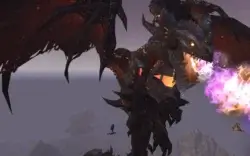
Deathwing was the dragon that revolutionized a juggernaut.
In 2010, World of Warcraft had more than 12 million subscribers worldwide. It was difficult to overstate how enormous the game had become.
Then Blizzard unleashed Deathwing the Destroyer.
Deathwing wasn’t merely another raid boss waiting patiently inside a dungeon for adventurers to arrive and kill him. His return caused the Cataclysm itself. Azeroth was torn apart by earthquakes, floods, eruptions and destruction. Familiar zones changed. Places players had known for years were transformed.
And Cataclysm brought another enormous change: flying across the old continents of Azeroth.
Suddenly, areas I had spent years crossing from the ground could be viewed from the backs of griffins, hippogryphs, bats and other flying mounts.
The world felt different because Deathwing had broken it.
I’ve played World of Warcraft for more than twenty years. There was no way I could make a list of my favorite video-game dragons without including the Breaker of Worlds.
7. Latias — Pokémon GO

The Pokémon franchise has some unconventional ideas about what constitutes a dragon.
Charizard is a winged, fire-breathing reptile that looks as though someone drew the word “dragon.”
Fire/Flying type.
Not Dragon.
Appletun looks like an apple pie that came to life.
Dragon type.
Go figure.
Latias falls into the “go figure” category, too. She’s Dragon/Psychic, but with her sleek body and swept wings, she looks more like a futuristic fighter jet than a traditional fantasy dragon.
So why does she make my list?
Because my Latias is special.
She was my first perfect shiny Legendary Pokémon.
“Perfect” means all three of her individual stats maxed out at 15: 15 Attack, 15 Defense and 15 HP. Pokémon GO players call that a “hundo.”
“Shiny” means she also has her rare alternate coloration. Instead of Latias’s normal red-and-white appearance, shiny Latias is yellow-gold and white.
For a Legendary raid encounter, the odds of getting both—the shiny and the perfect 15/15/15 stats—are roughly 1 in 4,000.
Somehow, that’s the Latias I caught.
Fighter jet or not, she’s a dragon.
And she’s definitely my dragon.
8. Hellrazor — RAID: Shadow Legends (2019)
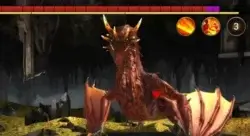
As video-game dragons go, Hellrazor doesn’t particularly stand out visually or technically.
He’s a big red, two-legged dragon.
He breathes fire.
He eats champions.
Nothing revolutionary here.
What earns Hellrazor a spot on my list is familiarity—and frequency.
Like so many mobile RPGs, RAID: Shadow Legends is about the grind. You repeat an encounter over and over again while crossing your fingers and hoping the game’s random-number gods finally give you what you need.
Hellrazor guards some particularly useful artifact sets, including Speed and Lifesteal gear. Those can be tremendously useful when building champions and progressing through the game.
So you fight Hellrazor.
You kill him.
You sift through his treasure.
Not what you wanted.
You fight him again.
Still not what you wanted.
Again.
Again.
Again.
Welcome to mobile gaming.
I’ve probably killed Hellrazor more times than I’ve killed every other dragon on this list combined.
9. The Dragons of Elsweyr — The Elder Scrolls Online (2019)
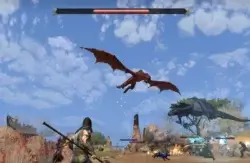
When today’s gamers talk about The Elder Scrolls, most of them mean Skyrim.
I get it. Skyrim is the granddaddy of modern fantasy RPGs. Even plenty of normie, non-gamer parents know the name.
And while players lament that they’ve been waiting forever for another numbered Elder Scrolls game, I chuckle.
I’m Gen-X.
I’ve been wandering Tamriel since The Elder Scrolls: Arena in 1994, when installing a massive RPG meant feeding a stack of 3.5-inch floppy disks into a computer.
Those early Arena dungeons could be genuinely creepy, too. Undead enemies emerging from the darkness delivered primitive but surprisingly effective jump scares.
Twenty-five years later, The Elder Scrolls Online: Elsweyr finally gave me the dragons I wanted from the franchise.
Now I know what some of you are thinking.
What about Alduin from Skyrim?
Pfft.
I slaughtered the supposed World-Eater with a sword and shield without breaking much of a sweat. After all that buildup, Alduin was a letdown for me.
The dragons roaming Elsweyr were another matter.
These were world events. A dragon would appear, and players would race across the map toward it. You didn’t stroll up alone, draw your trusty sword and casually send the beast back to whatever afterlife dragons occupy.
You wanted company.
Lots of company.
Dozens of players could converge on one dragon, surrounding it with warriors and spellcasters while the beast tore into the crowd.
That’s what I wanted an Elder Scrolls dragon to feel like.
Alduin was supposedly going to eat the world.
An Elsweyr dragon made me happy to see a small army coming over the hill.
10. Rathalos — Monster Hunter Now (2023)
My Zoomer son has played and beaten all of the Monster Hunter games.
He’s the kind of young man who has a bank of computer monitors in his bedroom and a variety of gaming consoles tucked underneath.
You know the type.
So when a simpler version of Monster Hunter came to mobile phones, I downloaded Monster Hunter Now so the old man could play with his boy.
At first, I was a little disappointed.
The early monsters seemed fairly dinosaur-esque. Young me would have loved them. Present-day me—the guy who runs something called Carpe Draco—wanted a little more dragon in his monster hunting.
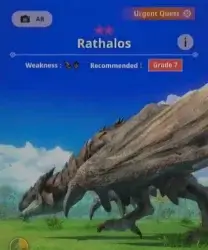
Then I encountered Rathalos.
Here was a flying, reptilian, fire-breathing tyrant.
Now, Monster Hunter fans will immediately object.
Rathalos is not technically classified as a dragon. In Monster Hunter lore, he’s a Flying Wyvern.
Fine.
I don’t care if the beast has only two legs.
It’s a dragon.
And Rathalos was the monster that finally hooked me.
Maybe that’s an appropriate place to end this list.
I started in 1980, sitting in front of an Atari and pretending three collections of pixels shaped vaguely like ducks were dragons.
More than four decades later, I’m carrying a computer in my pocket powerful enough to put a fire-breathing Rathalos into the real world around me—and using it to hunt monsters with my son.
The technology changed.
The graphics changed.
The games changed.
Apparently, I didn’t.
Give me a sword, point me toward the dragon, and I’m still ready to play.
No spam. Unsubscribe anytime. Your email stays in the hoard.
As a non-video gamer, I understand little of the technological intricacies you describe. But I know passion when I see it. And now i know a bit more about Carpe Draco Dad. Priceless!
As a papercrafter, I’ve seen techniques in my art change exponentially over the 35 years that I’ve been art stamping. Moving from stamping small rubber images to make a cohesive picture (think individual stamps such as a tree, a small section of grass, a cloud, a mountain and a bunny rabbit being stamped and restamped on one piece of paper to make an outdoor scene) to larger, more sophisticated images to massive quantities of images sold by stamping companies in brick and mortor stores and the the insipiant internet (called the world wide web).
Now we have literally hundreds of techniques and products that drive the papercrafting business. It’s overwhelming, and as you might guess, a total money suck if we’re not careful. Yep. Time marches on!
Time and “progress” never tire or slow. I try to embrace as much of the new as my set-in-my-ways opinions/preferences allow, but still catch myself peeking at the rearview mirror on occasion. Thanks for the comment, Jan!
Comments are closed.